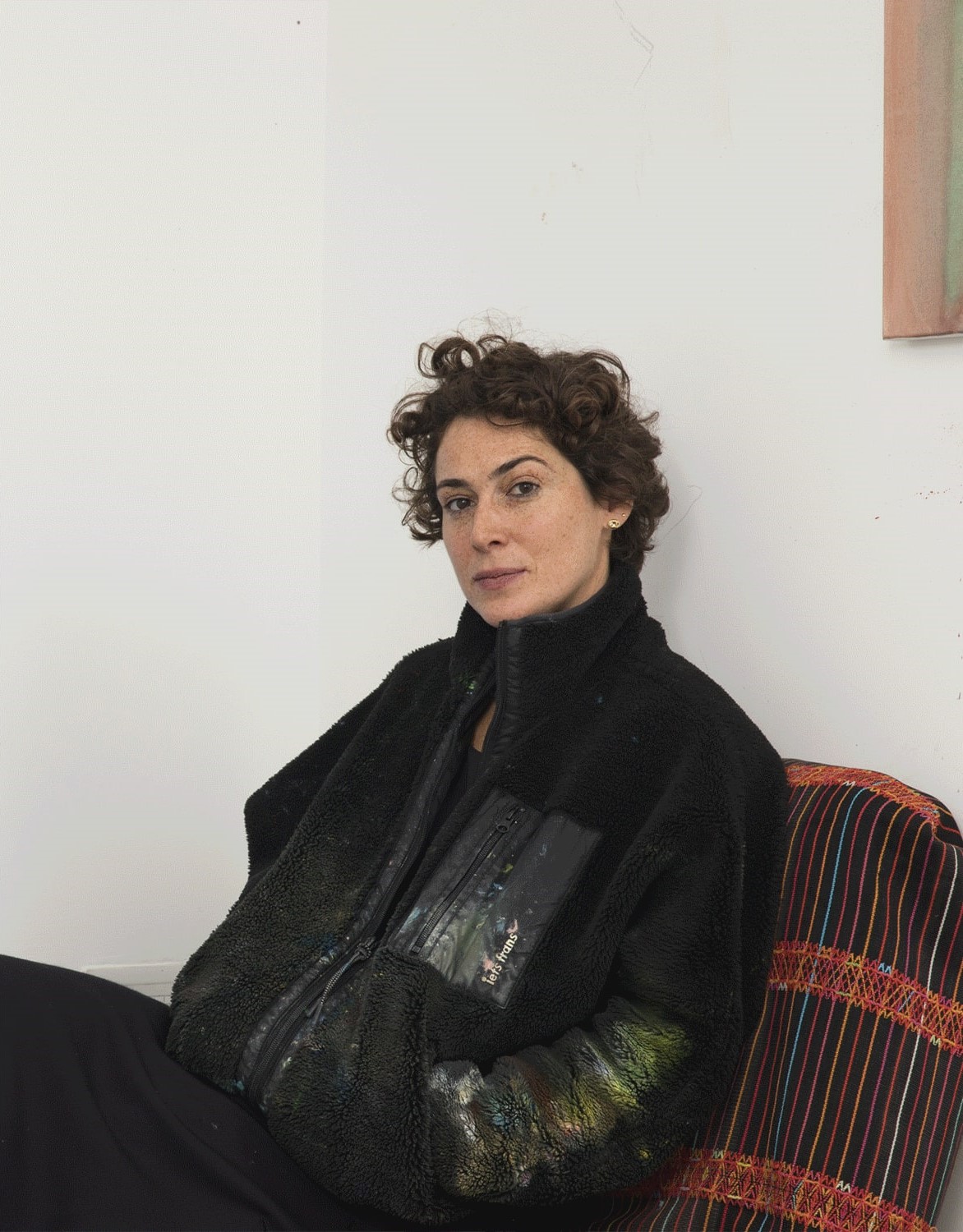
Rosalind Nashashibi
Occupation Of The Inner Life
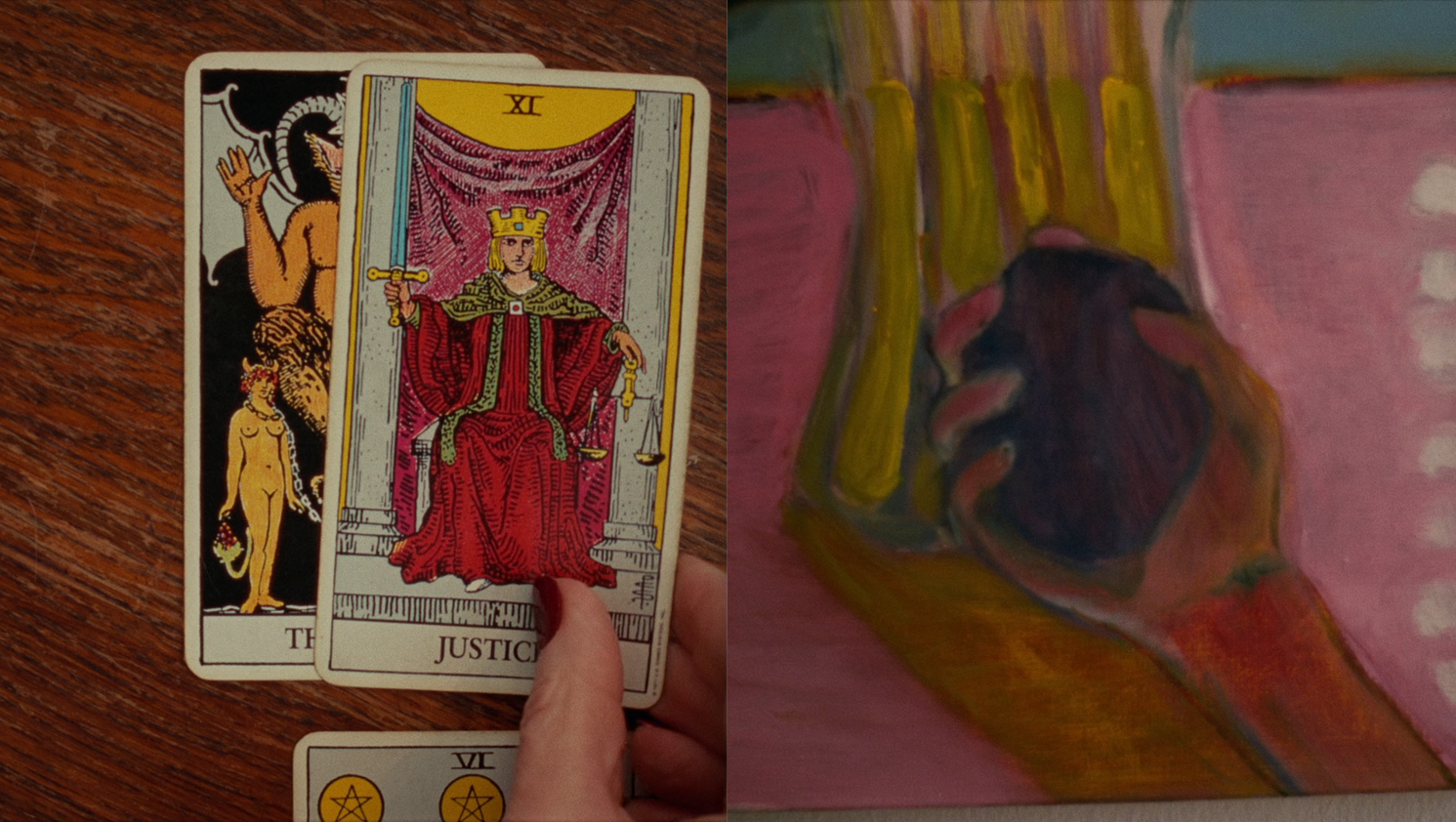
Digitised 16 mm film, 8', colour, sound, loop, 2025-2026
WE COMMIT TO REDUCING OUR ELECTRICITY CONSUMPTION TOGETHER. THE VIDEO WORKS IN THE MIRE PROGRAMME ARE ONLY SHOWN DURING PEAK HOURS, FROM 7 TO 9.30 am, 12 TO 2.30 pm & 5.30 TO 8 pm. THANK YOU AND ENJOY YOUR JOURNEY.
Nashashibi’s film presents itself as a reflection on painting, on the passage of time, and on human relationships. These are all themes the artist frequently explores in her work. In this particular case, she adds a mystical dimension. This aspect is evident in the film on several levels; firstly through the title, Occupation of The Inner Life, and then through the motifs presented at the film’s opening: the circularity of the objects in the frame, the cat, the hands solemnly placed on the table, and the tarot cards. Moreover, the presence of the tarot deck echoes a certain cinematic tradition. One is reminded in particular of Agnès Varda’s film Cléo from 5 to 7 (1962) or Jacques Rivette’s Céline and Julie Go Boating (1974). Mysticism and femininity are associated in these works and reflect the protagonists’ desire to reclaim their own history. Nashashibi does the same but blurs the boundaries between the subject being filmed and the subject doing the filming. She alternates close-ups of the young girl with the cards, Pauline, with close-ups of her daily life filmed with a handheld camera. The use of black-and-white film, employed for certain shots, lends the image a dense texture and echoes the artist’s paintings, which we also see behind the camera or in her studio. The paintings unfolding were created over the last two years and reflect the violence and despair experienced in the Levant region, including the West Bank and Gaza. A multitude of symbols appear on screen – the horse, the swan, the bouquet of flowers, the clenched stone, motherhood, Baroque music – and the artist constructs a complex repertoire of meaning in which the animal world, resistance, multiple temporalities and tears (Purcell’s ‘The Plaint’) intermingle. According to the artist, this juxtaposition evokes the idea of perseverance – sumud in Arabic – within a context of physical and emotional occupation that impoverishes the inner lives of the populations affected by it. Viewed from this angle, the title takes on a whole new meaning.
Production: Fonds cantonal d'art contemporain, Geneva, for the MIRE programme